
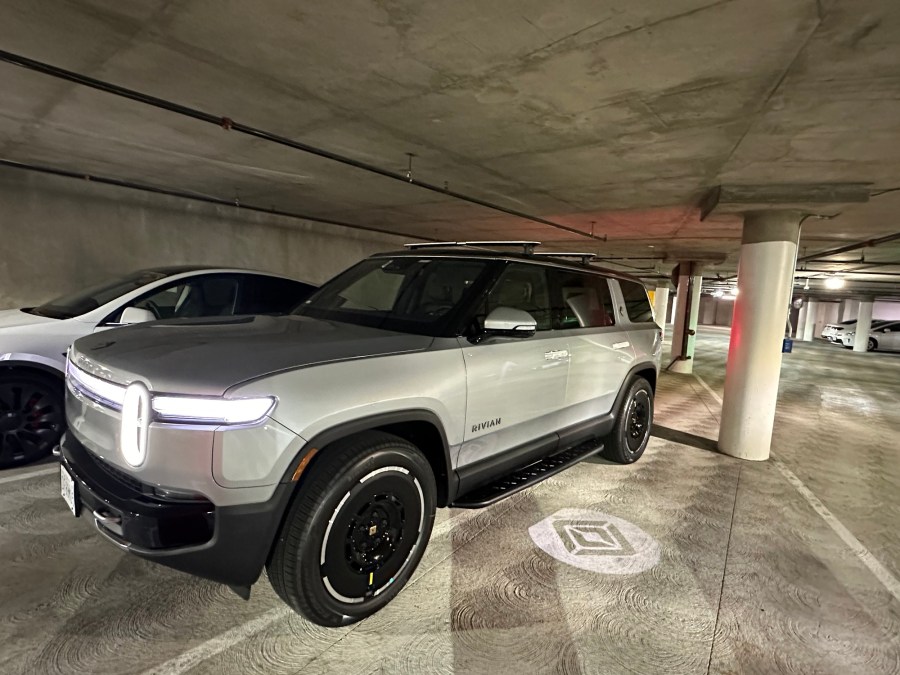
Variety is the spice of life, resources allowing, and as this series has demonstrated over the decades (!) the automotive journey is no exception. In keeping with that theme, it’s been an interesting electric journey so far, starting with the Model S Performance (Raven) in 2020, moving to the Taycan Turbo about a year later, then the BMW i4 M50 a couple of years on from that, each sharing the stable with a Model Y. Continuing to explore the realm of performance EVs was the likely next step, but there’s definitely a sense of having “been there, done that” given the long history of performance cars in general that have populated these pages.
One much less explored category over the years however has been SUVs, and particularly SUVs with some off-road cred. There’s been the Landrover Freelander, and of course the much loved Toyota FJ Cruiser, but really that’s about it, and while this would suggest a decided lack of interest, that’s really not the case. While highly tuned performance tools have always been a primary passion, these off-road capable, “conquer any obstacle” behemoths have always been a strong curiosity and, strangely enough, this is a hot category in the EV world!
It’s honestly a little weird how much choice there is in this space. Everything from the Hummer EV, which brings heritage, sharp looks and over the top insanity, to the Cybertruck which, in typical Tesla fashion, is reinventing what “truck” even means with its sci-fi videogame styling. If there’s one marque that’s really captured the attention, and passion, of those who occupy the intersection of the off-road and EV communities though, it’s been (spoiler alert) Rivian.
If Land Rover (or maybe better to say Tata) had any interest in charting a course to the future, the R1S is very likely the electric Range Rover they’d have ended up making. So good for Rivian they prefer to bleed the last few dollars out of diesel enthusiasts then, or maybe it doesn’t even matter given none of the legacy auto manufacturers have demonstrated real ability to compete with the EV native startups (Lucid, Rivian and, yes, Tesla still) when it comes to technology.
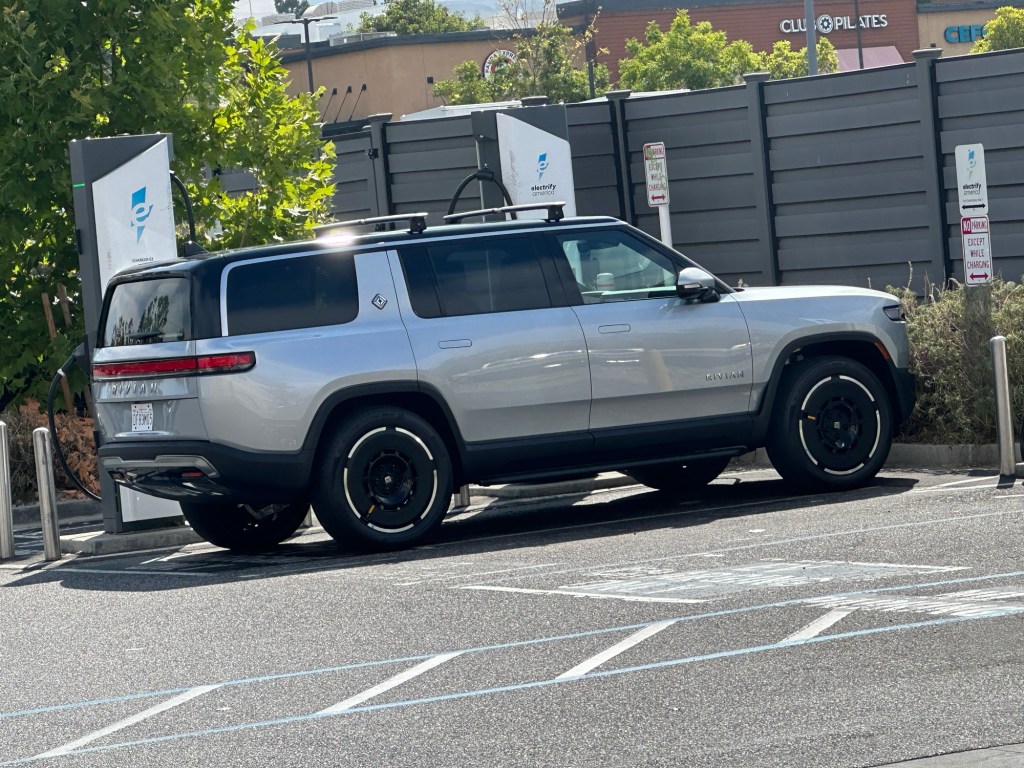
So let’s talk about this mysterious beast that is the Rivian R1S (Gen 2). At 200.8” long and 82” wide it’s gargantuan by most standards, but would probably still be considered “mid-sized” by outrageous US standards given the best selling “cars” are pickup trucks that are two feet longer still. In keeping with the Range Rover comparison, it’s in between the standard wheel base at 198” and the long wheel base 7 seater at 207”, albeit closer to the former. As a big EV, it’s also of course heavy, even by big truck standards, weighing in at 7000lbs.
Two things are noteworthy here though. The first is that Rivian has somehow, miraculously, managed to dial in legitimate steering feel. This is a vanishingly rare commodity, and in this respect the R1S shares more with the Taycan than it does with any other EV (and even most ICE cars honestly). Second is that it really doesn’t feel its size or weight on the road. Part of this is the incredible torque and straight line performance (even the basic dual motor is quoted as being good for 4.5s to 60, and in the real world folks get it there even quicker than that), and part is the excellent visibility. The view out the front is panoramic, with just enough of the hood visible to help place the vehicle and, given the EV native design, that hood is a reasonable length. Side and rear views are great also, with well thought out pillar design and no notable blind spots. Combined with the tall ride height, the driver finds themselves above the crowd with few visual obstructions.
So the view outside is pretty good, but the view inside is even better. What Rivian has been able to accomplish in terms of interior design, materials quality and build quality is especially impressive for a startup automaker. The surfaces are all tactilely excellent, with very high quality “vegan leather” (aka plastic, but still…) on most surfaces that you touch, high quality soft touch plastics on the surfaces you don’t touch, “Alcantara” (look and texture, not the actual brand) on the headliner, pillars and visors, and beautiful ash wood accenting the dash.
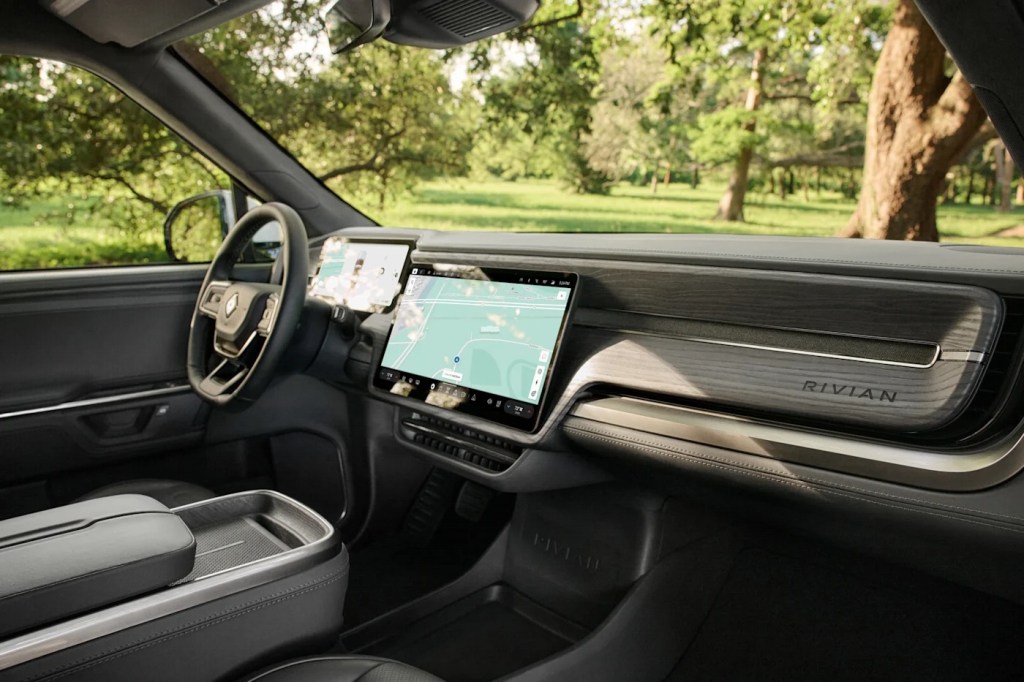
Overall it’s a very nice place to be and an interesting mix of the traditional and “minimalist modern” approaches. In terms of the latter, there is no glove compartment, the climate vents are digitally controlled, as is most everything else, through two very high quality displays up front, a 15” central touch screen, and a 12” instrument cluster for the driver, and a 7” display for rear seat passengers. In terms of the former, the steering wheel has a very traditional feel, with both stalks and buttons, and there is ample storage all around (glove compartment not withstanding), including a small “drawer” under each front seat, storage within the 3rd row armrests, a deep compartment under the center armrest, excellent seat back pockets, and generous storage bins on all four doors. One nice, and uniquely Rivian, touch is the flashlight built into the drivers side door, “Rolls Royce umbrella” style. Most drivers may never use it, but if you ever ended up needing it (very possible, especially off-road), it could be a legitimate life saver. Build and materials quality outside is excellent as well, with deep rich paint, solid accessory attachments, and clean panel gaps. Overall it was a much closer match to the BMW than to any Tesla, but Rivian is a startup so YMMV.
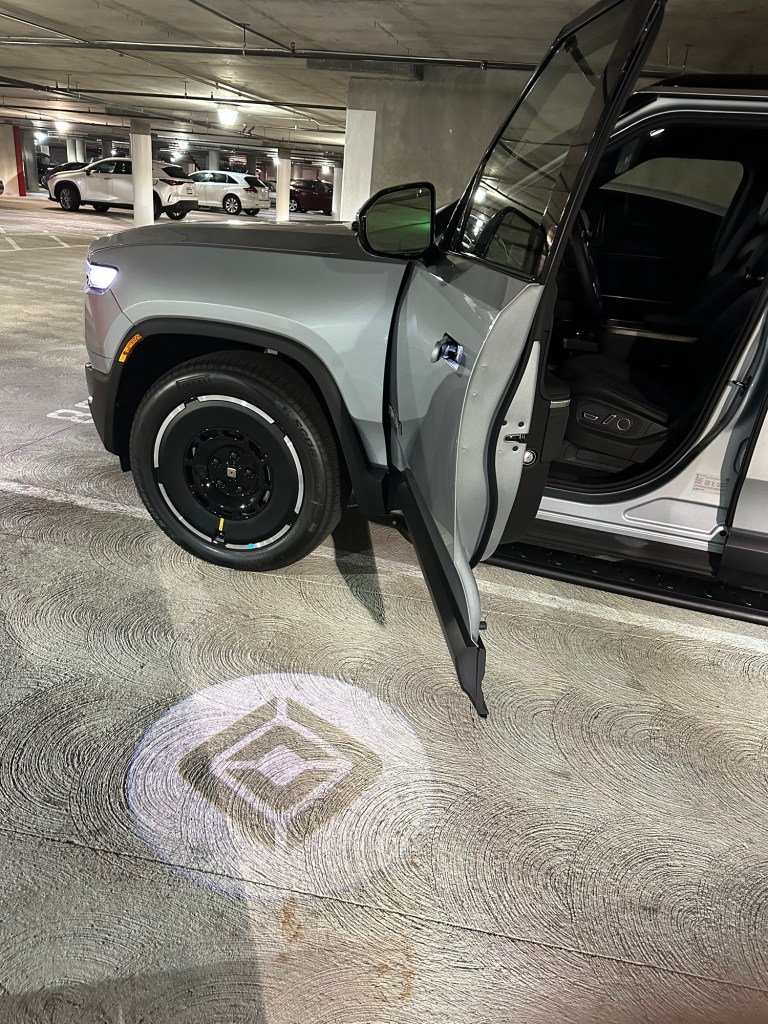
The tech on offer is ample, with pretty much ever modern “connected car” feature present and accounted for including an excellent, comprehensive, application, and a robust ADAS suite (free for now, subscription for more advanced features inbound). Uniquely EV features include a massive, power operated, front trunk, under trunk storage big enough for a compact spare, a nice flat floor for rear passengers, a power operated charging door up front, “self presenting door handles” (that have been a bit controversial), phone key support and 22” “range wheels” that actually look good for a change, and also seem to work (more on range later). One minor nit is for Tesla supercharger compatibility, the charging port is in the worst spot possible. Rear driver or front passenger would have been a lot more practical. In terms of more traditional features, there are heated and ventilated front seats, heated second and third row seats, dual zone climate and a giant glass roof. Notably absent are Apple CarPlay and a HUD. Much like with Tesla the software is excellent, so the former is only really needed for Apple diehards, and the latter is a bit superfluous given the excellent modal (but oddly not customizable) instrument cluster. And last but not least, some serious puddle lights!
In terms of driving, range and charging, the Rivian scores high as well. Steering feel and acceleration were covered up top, but the R1S also feels well composed on road, especially for a body on frame (sort of, not really, it’s a hybrid unibody/BoF, but still) off-road capable truck. The ride on the Gen 2 with its updated adaptive dampers, and air suspension, is excellent, although errs much more on the sporty side, which may be off putting for some; it’s more Defender than Range Rover in this respect! Speaking of the air suspension, it can automatically adjust ride height to maximize efficiency, which works out well given the thing is a giant rolling box. Observed efficiency with the range wheels so far over 140 miles of mainly highway, at 75MPH, has been 2.5mi per kWh, with both roof rails (OEM) and side steps (non-OEM) which translates to about 352mi of real world range on a full charge at 75MPH, which is very good indeed! When it comes time to recharge, Rivian quotes 220kW peak charging. Observed charging at a 350kW EA station, plugging in without pre-conditioning at 49%, was an initial charge rate of ~110kW, leveling off to 60kW at around 79%, and holding into the mid 90s where it dropped off to around 38kW. Not Taycan incredible, but definitely not bad. The i4 definitely had a flatter curve and held a higher rate longer though. It will be interesting to see how things go over successive charge cycles over time, and with additional updates. Speaking of which, Rivian has been releasing updatesm with significant improvements, as frequently, or even more-so, than Tesla, which is fantastic to see and another differentiator vs legacy auto.
Overall the R1S is a fantastic choice for anyone looking for a reasonably large, premium 3 row SUV (the third row is a nice place to be, with solid headroom, and good room overall for anyone below 5’10” or so) with massive storage (especially given the frunk). It’s got a ton of little “truck amenities” as well, including AC outlets in the frunk, the rear, the backseat, and the third row, dedicated torque distribution modes for “all terrain” and snow, 7700lb towing capacity and of course the aforementioned flashlight. This one is a keeper. Highly recommended!
 Complaints Incorporated...